A Message of Compassion, Hope, and Belonging
To Everyone Living with Ehlers-Danlos Syndrome Who’s Ever Felt Overlooked
If you’re reading this, chances are you’ve had moments where your body felt like a mystery — even to those meant to help you. You may have been brushed off, misunderstood, or told that what you’re feeling can’t be explained. Perhaps you’ve waited years, even decades, for someone to take your symptoms seriously.
We want you to know: you are not alone in this.
Ehlers-Danlos Syndrome (EDS) is a complex and often misunderstood connective tissue disorder. And far too often, those who live with it find themselves having to advocate fiercely — in doctor’s offices, in emergency rooms, and in daily life — just to be believed. It can be an exhausting journey. One that leaves many feeling isolated, unheard, and dismissed.
But here, in this space, you are seen. You are believed. And you are deeply valued.
⸻
Why We Created This Post
This isn’t just a list of symptoms or statistics. It’s a collective voice — a reflection of what so many of us wish we could say to the healthcare providers we’ve turned to for help.
This post was written for every person who has felt unheard in a medical setting. For those who are newly diagnosed. For those still searching for answers. And for those who have lived with EDS for years but continue to feel like outsiders in their own healthcare journey.
We know how complicated, frustrating, and sometimes heartbreaking this path can be. But we also believe in something greater — the power of community, the strength of shared stories, and the hope that comes from being seen for who you truly are.
⸻
The Emotional Toll of Being Dismissed
Many people with EDS report that one of the hardest parts of their journey isn’t just the physical pain — it’s the emotional toll of being doubted or dismissed.
From a young age, you may have been told you were too sensitive. That your pain was exaggerated. That your symptoms didn’t make sense. You may have felt like you were living in a body that was constantly “too much” — too fragile, too complicated, too misunderstood.
This experience can leave deep wounds. It erodes trust in the very system that’s meant to help you. And over time, it can convince even the strongest among us to doubt our own reality.
But the truth is: your pain is real. Your symptoms are real. And what you are experiencing deserves not only to be acknowledged — it deserves compassionate care.
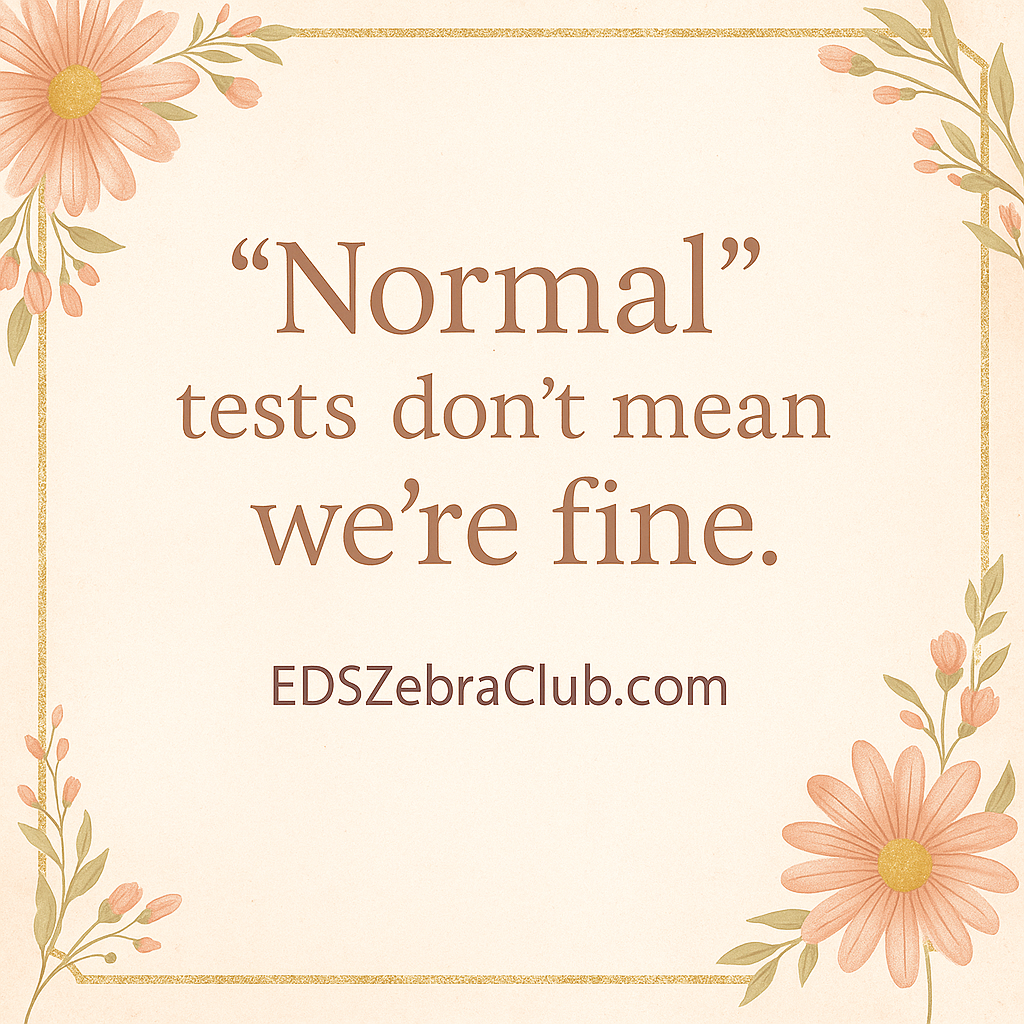
What People With Ehlers-Danlos Syndrome Wish Doctors Knew
So often, people with Ehlers-Danlos Syndrome quietly carry the weight of feeling misunderstood — not only in terms of their diagnosis, but as whole people navigating a complex, exhausting, and often invisible condition. Many express what they wish their doctors had known, long before the pain became overwhelming or the trust began to erode.
These are some of those deeply held truths:
- A patient who seems “too informed” isn’t trying to be difficult — they’ve simply had to become an expert in their own body after years of unanswered questions.
- Chronic pain doesn’t always look the way you expect. Some of us laugh through it. Some of us mask it. Some of us grow quiet from exhaustion. None of it is exaggeration.
- Fatigue, brain fog, dizziness, GI issues, joint pain — they may seem unrelated, but for someone with EDS, they are often connected pieces of the same puzzle.
- Our medical trauma runs deep. Dismissal, disbelief, and years of misdiagnosis have made it hard to trust — but we still show up, hoping this time will be different.
- Being “functional” doesn’t mean we’re fine. Many of us continue working, parenting, or caring for others while living in constant pain.
- We may look “too young” or “too healthy” to be sick — but EDS is often invisible, and appearance doesn’t reflect severity.
- We’re not asking for perfection. We’re asking for compassion, curiosity, and a willingness to listen without judgment.
- We don’t expect every doctor to know everything about EDS — but we do hope for one who will walk with us, not away from us.
- Most of all, we need to be believed. For many of us, that’s where healing begins — not just in the body, but in the heart.
What we wish for, more than anything, is a healthcare experience rooted in respect — one that treats us as people first, not puzzles to solve or cases to dismiss.
When a provider pauses to listen, acknowledges our lived reality, and says “I believe you,” it does more than validate our pain — it restores our dignity.
⸻
A Note to Medical Providers
We know your job isn’t easy. We understand the time pressures and the complexity of modern healthcare.
But we also know that one of the most healing things a provider can offer is compassion.
You don’t have to have all the answers. You don’t have to be an EDS expert. But when you slow down, make eye contact, and say, “I believe you,” it can change everything.
To the providers who do listen — thank you. You are the reason some of us finally found answers. You are the reason some of us made it through.
⸻
If You’re Still Waiting for a Diagnosis
Maybe you’ve been told your symptoms are “just anxiety.”
Maybe your tests always come back normal.
Maybe you’ve been handed labels that never quite fit.
And maybe, deep down, you’ve wondered if you’ll ever find a name for what you’re going through — or someone who truly understands.
Please know this: there is a community that sees you. Whether your chart says EDS, HSD, or something still uncertain — your experience is real. Your voice matters. And you don’t have to walk this road alone.
Finding Belonging at the EDS Zebra Club
At the EDS Zebra Club, we’ve created a space where every person navigating a connective tissue disorder can feel at home — whether they have a confirmed diagnosis or not.
We believe in care that begins with empathy. We believe in lifting one another up. And we believe in a future where people with EDS don’t have to fight to be heard.
You are welcome here — not just as a patient, but as a whole person. With all your complexity, strength, and resilience.
⸻
In Closing
To everyone who has ever had to explain their pain over and over again…
To everyone who has ever left an appointment in tears…
To everyone who has ever been told “it’s all in your head”…
You are not invisible.
You are not difficult.
You are not alone.
There is hope. There are people who understand. And there is a place for you to belong.
⸻
Join Our Community:
Find us on Facebook at EDS Zebra Club.
Your story matters here.